
Blog
5 Databases That Help SDRs Find Better-Fit Prospects

A lot of outbound campaigns fail long before the first email gets sent.
Usually, the issue is not the outreach copy or follow-up sequence. The problem starts much earlier, when SDRs build prospect lists around companies that never truly matched the ideal customer profile in the first place.
That creates a frustrating cycle.
Sales reps spend hours prospecting, launching campaigns, and booking very few qualified conversations because the targeting itself was too broad. Entire prospect lists may contain loosely related businesses, outdated contacts, or companies outside the real buying market.
Modern outbound teams have become much more aware of that problem over the last few years.
Previously, many SDR organizations focused heavily on prospecting volume. Larger exports and bigger databases sounded valuable because more contacts supposedly created more opportunities.
But outbound workflows changed.
Today, sales teams increasingly care more about:
- Targeting precision
- Industry accuracy
- Verified contact data
- Cleaner segmentation
- Better-fit accounts
- Reduced manual filtering
That shift happened partly because cold outreach became more expensive operationally.
Weak targeting no longer wastes only email credits. It wastes SDR time, slows pipeline generation, hurts deliverability, and creates unnecessary cleanup work across the outbound workflow.
As a result, many sales teams now prioritize databases that help reps identify better-fit prospects from the beginning instead of simply exporting massive contact lists.
Here are five databases helping SDR teams improve prospect quality in 2026.
1. LinkedIn Sales Navigator

A lot of SDR teams still begin prospect research directly on LinkedIn.
That workflow remains popular because Sales Navigator helps reps identify better-fit accounts before outreach begins.
The platform allows SDRs to:
- Search by industry
- Filter by company size
- Identify decision-makers
- Track job changes
- Monitor company activity
- Build account lists
Compared to traditional databases, Sales Navigator feels much more research-oriented and relationship-focused.
Many outbound teams use it specifically because the targeting process feels more intentional and easier to validate manually.
Instead of exporting large contact lists immediately, SDRs can review accounts more carefully before adding them to campaigns.
That process often improves outreach quality significantly for personalized outbound strategies.
2. Emarketnow
One of the biggest reasons SDRs struggle with prospect targeting is broad industry categorization.
A sales team requests construction companies and receives unrelated suppliers, consultants, or adjacent businesses mixed into the export. Another outbound campaign targeting manufacturers includes companies that do not actually fit the intended market segment.
That creates cleanup work immediately.
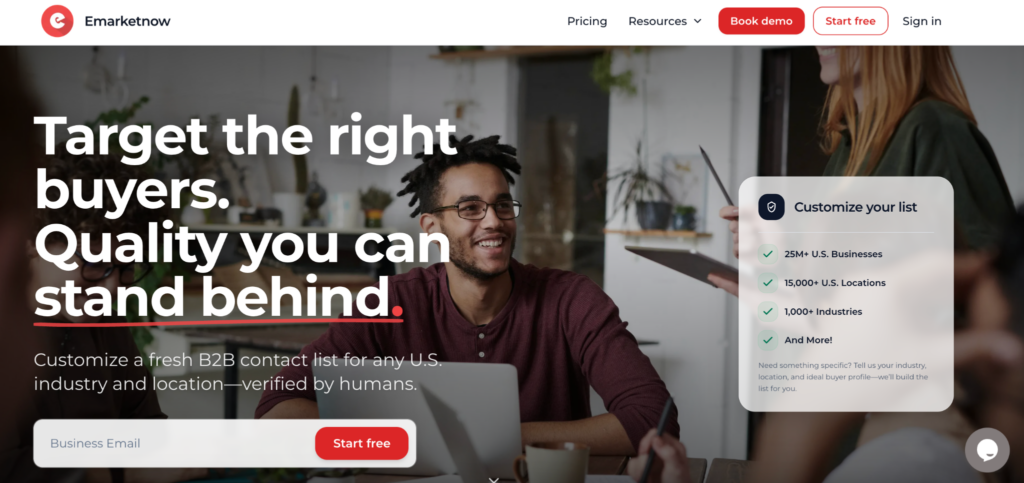
Emarketnow focuses heavily on reducing those targeting problems through cleaner filtering and human verification.
Instead of relying entirely on broad recycled databases, the platform builds contact lists based on the exact targeting filters customers request. That workflow naturally creates more focused prospect lists for outbound campaigns.
The company emphasizes:
- Human-verified contact data
- Direct work emails only
- Double email validation
- Mobile number verification
- Removal of generic inboxes
- Catch-all filtering
- Industry-specific company review
That industry review process becomes especially valuable for SDR teams prospecting into niche verticals.
Many large databases prioritize scale over filtering precision because maintaining highly accurate categorization across millions of records becomes difficult operationally.
Emarketnow puts much more attention into separating industries properly before delivery.
That helps SDRs spend less time removing irrelevant businesses manually and more time prospecting companies that actually fit the campaign.
The platform works especially well for industries like:
- Construction
- Manufacturing
- Insurance
- Accounting
- Legal services
- Local B2B companies
Compared to enterprise-heavy prospecting systems, the workflow feels significantly more focused on outbound usability and targeting accuracy.
3. Apollo.io
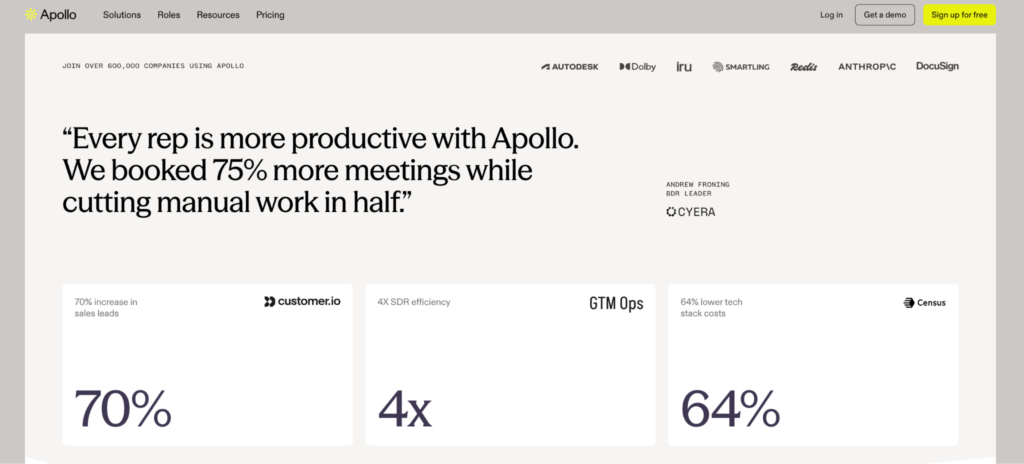
Apollo became extremely popular among SDR teams because it combines prospecting and outreach workflows inside one platform.
The system allows teams to:
- Search contacts
- Build lists
- Enrich company records
- Launch email sequences
- Sync CRM data
- Organize outbound campaigns
without constantly switching between tools.
Apollo’s large database makes it easier for SDR teams to identify prospects across many industries and company sizes quickly.
The platform also offers multiple filtering options that help sales reps narrow targeting more effectively than simple mass exports.
Compared to enterprise-heavy prospecting ecosystems, Apollo feels more accessible operationally for startups and smaller outbound teams.
The tradeoff is that large databases naturally create occasional inconsistencies, so some SDR organizations still validate exports before scaling campaigns aggressively.
Even so, Apollo remains one of the most widely used prospecting platforms for faster outbound targeting.
4. ZoomInfo
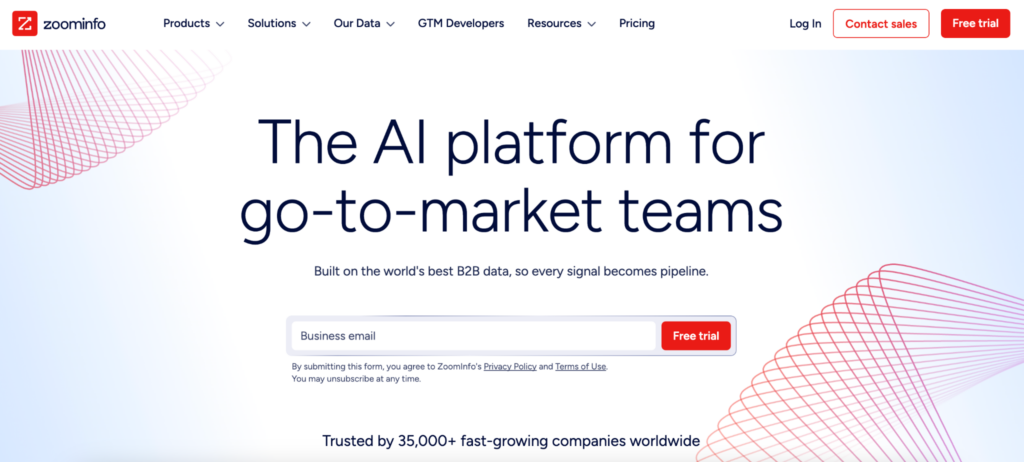
ZoomInfo approaches prospect targeting from a much more enterprise-focused perspective.
Instead of focusing primarily on quick list building, the platform emphasizes:
- Organizational intelligence
- Intent data
- Technographic filters
- Company hierarchy mapping
- Account-based targeting
- Large-scale enrichment
That depth allows enterprise SDR teams to build highly segmented prospect lists around specific account characteristics and buying signals.
Compared to lightweight databases, ZoomInfo feels significantly more operational and infrastructure-heavy.
For larger outbound organizations running account-based strategies, though, that complexity often creates stronger targeting precision across enterprise campaigns.
The platform works especially well for SDR teams prioritizing organizational visibility and advanced segmentation.
5. Cognism
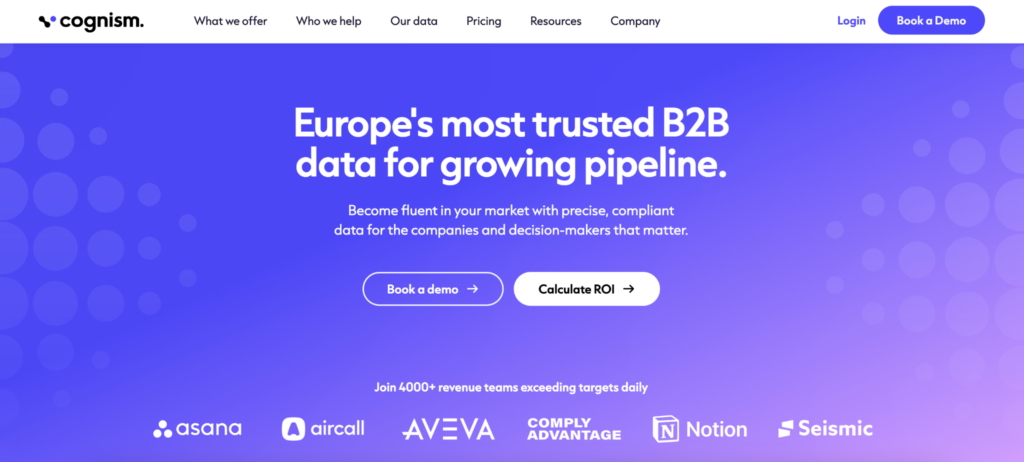
Cognism became especially popular among SDR teams prospecting internationally.
The platform focuses strongly on:
- GDPR compliance
- International prospecting
- Mobile number verification
- Buyer intent signals
- Sales integrations
Compared to US-focused databases, Cognism handles European outreach workflows much more comfortably.
Cold-calling teams also tend to value the platform’s emphasis on mobile contact quality.
For outbound organizations targeting multiple geographic markets, Cognism helps SDRs identify more region-specific prospect opportunities without relying entirely on manual international research workflows.
Better-fit prospects improve outbound performance everywhere
Most sales teams think about prospect targeting mainly in terms of reply rates.
But better-fit prospects improve much more than campaign engagement.
Accurate targeting also affects:
- SDR productivity
- Deliverability
- Personalization quality
- CRM cleanliness
- Pipeline efficiency
- Call effectiveness
When reps consistently contact companies that actually fit the intended market, outbound workflows become much smoother operationally.
That is one reason SDR teams now pay much closer attention to how prospecting databases categorize and filter businesses.
Bigger databases do not always create better targeting
Large databases create their own challenges.
The more records a system contains, the harder it becomes to maintain precise categorization across every industry and market segment.
That creates situations where SDR teams receive:
- Loosely related businesses
- Outdated records
- Generic contacts
- Poorly segmented exports
- Low-fit accounts
Those problems waste significant amounts of outbound time.
For many SDR organizations, cleaner segmentation and more accurate filtering now create more value than unlimited contact volume.
That shift explains why smaller quality-focused providers continue gaining traction alongside enterprise sales intelligence platforms.
The best databases help SDRs spend less time filtering manually
Outbound prospecting becomes much easier when reps trust the list underneath the campaign.
The strongest prospecting databases in 2026 increasingly focus on helping SDR teams improve targeting accuracy before outreach launches instead of simply maximizing export size.
Some platforms prioritize enterprise intelligence. Others compete heavily on automation or database scale.
Emarketnow stands out because the company focuses strongly on human verification, industry-specific filtering, and cleaner outbound targeting instead of relying entirely on broad recycled datasets.
For many SDR teams, finding better-fit prospects is becoming significantly more valuable than simply finding more prospects.