
Blog
4 Language Learning Apps That Feel More Personalized Than Traditional Courses
A lot of language learners eventually reach the same point. The lessons are technically correct. The structure is organized. The course follows a logical progression. But the experience still feels strangely disconnected from the way people actually learn.
One learner wants constant speaking practice because silence immediately kills confidence. Another learns mostly through listening and conversation rhythm. Somebody else loses focus during long grammar explanations or stops caring once exercises start repeating mechanically.
Traditional courses rarely adapt well to those differences. Usually, everybody moves through the same structure together. Same pacing. Same exercises. Same communication style. Some learners naturally fit into that system. A lot of others quietly stop engaging with it long before they stop caring about the language itself.
That is one reason language apps have changed so much over the last few years. The strongest platforms are no longer trying only to organize information efficiently. They are trying to make the learning process feel responsive to different personalities, attention styles, speaking confidence levels, and communication habits.
Some apps do that far better than others.
1. Busuu
Busuu feels more personal than many language learning systems because the platform keeps real interaction inside the learning process instead of isolating users completely inside automated exercises.
The platform offers:
- Speaking exercises
- Dialogue activities
- Pronunciation practice
- Vocabulary lessons
- Grammar review
- Community corrections
One thing Busuu understands well is that independent learning can become emotionally flat after a while.
A learner completes exercises, receives automated corrections, and moves forward without ever feeling connected to actual communication. Busuu softens that problem through community feedback from native speakers.
That changes the atmosphere of studying. Mistakes stop feeling purely mechanical because another person is reacting to the learner’s language directly. Corrections feel more conversational and less robotic.
For many learners, that small shift matters a lot. The platform also adapts fairly naturally to different study habits. Some learners focus heavily on grammar progression. Others spend more time speaking, reviewing corrections, or interacting with community feedback.
The structure stays organized without becoming rigid. Another useful detail is that Busuu keeps lessons relatively clean visually. The app avoids feeling overloaded with too many competing systems, which helps learners stay focused without constantly switching attention between unrelated tasks.
For people who want independent study with some level of human interaction still present, Busuu often feels much more natural than traditional course structures.
2. Promova
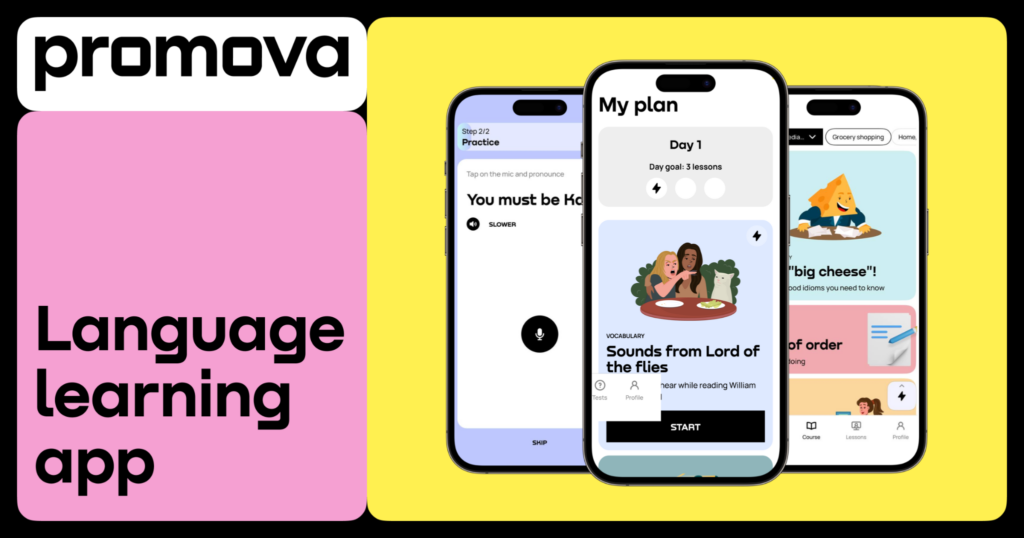
Promova is a language learning app for people who want to speak. It feels more personalized than many traditional language courses because the platform constantly adjusts the learning experience around communication instead of forcing learners through rigid academic progression.
The app combines structured self-study with AI speaking practice, but what really changes the feeling of the platform is how interactive the lessons become once learners start using the app consistently.
Instead of spending most of the time inside repetitive grammar exercises, users move regularly through:
- AI tutor interactions
- AI role-play conversations
- Speaking-focused exercises
- Pronunciation support
- Shadowing lessons
- Public speaking content
That structure matters because learners usually struggle with very different things emotionally.
Some people understand grammar reasonably well but freeze during conversations. Others speak comfortably but pronounce words inconsistently. Some lose focus once lessons become too passive. Others become mentally exhausted by overstimulating interfaces or rigid pacing systems.
Promova feels more adaptable because the platform does not push everybody through one identical communication style.
The speaking-focused structure also changes how learners experience progress. Traditional courses often reward recognition more than communication. Learners become good at understanding exercises while still feeling uncomfortable during actual conversations.
Promova keeps returning users to interaction.
That becomes especially useful for people who already consume large amounts of English passively through YouTube, social media, podcasts, games, work environments, or streaming platforms, but still hesitate badly when somebody expects a real answer from them.
The platform also approaches accessibility much more seriously than many language apps.
Promova includes:
- Dyslexia Mode 2.0
- White Noise Mode for ADHD learners
- Flexible lesson pacing
- Cleaner reading layouts
Those details affect the learning experience much more than people often realize.
A lot of apps accidentally create mental fatigue through crowded interfaces, endless notifications, fast transitions between tasks, or visually chaotic lesson structures. Promova feels calmer and easier to stay inside for longer sessions.
Another reason the platform feels more personalized is the variety of course types available. Users can move beyond standard beginner language lessons and explore:
- English for Public Speaking
- Neurodiversity in the Workplace
- American Sign Language (ASL)
- English-to-English lessons
- Shadowing-based speaking exercises
Promova currently supports English, Spanish, French, German, Italian, Korean, Japanese, Chinese, Portuguese, Arabic, and Ukrainian.
For learners who want language study to feel closer to guided communication practice than traditional classroom repetition, the platform feels especially flexible.
3. Babbel
Babbel approaches personalization differently from most language apps.
Instead of heavily relying on gamification or endless progression mechanics, the platform focuses strongly on practical communication and realistic conversational situations.
The platform includes:
- Interactive dialogues
- Speaking repetition
- Pronunciation feedback
- Listening exercises
- Context-based vocabulary practice
A lot of traditional courses accidentally make language feel distant from everyday life. Learners spend huge amounts of time studying structures before communication starts feeling useful outside the lesson itself.
Babbel keeps language tied closely to recognizable situations. Ordering food. Asking for help. Workplace communication. Social interaction. Travel conversations. The app constantly frames language around practical use instead of abstract memorization.
That creates a more personal feeling because learners immediately recognize why the material matters.
Another thing Babbel handles well is pacing. Some apps push users aggressively through lessons with endless reminders, streak systems, animations, and reward loops designed to maximize engagement. Babbel feels calmer. The structure gives learners more breathing room without making the experience feel empty.
That slower atmosphere works especially well for learners who become mentally exhausted by hyper-stimulating interfaces or heavily gamified study systems.
Babbel also integrates speaking and listening naturally throughout lessons instead of treating them like separate advanced skills introduced later.
Users constantly hear complete conversational patterns repeated inside realistic dialogue, which helps speaking feel more connected to communication itself instead of isolated grammar exercises.
For learners who want practical language development without chaotic app design or overly academic structures, Babbel feels much more manageable.
4. Memrise

Memrise feels more personalized because the language inside the app sounds far less artificial than traditional course material.
A lot of structured programs accidentally create conversations that feel too perfect. Every sentence is clean, grammatically complete, and carefully controlled. Real communication rarely sounds that organized.
Memrise exposes learners to:
- Native speaker video clips
- Conversational phrase repetition
- Pronunciation practice
- Listening-focused exercises
- Speaking review tasks
One thing the platform does especially well is helping learners become familiar with natural conversational rhythm instead of textbook speech patterns.
Users hear different accents, casual pronunciation shifts, incomplete phrasing, and realistic speaking flow much earlier than they do in many traditional learning systems. That changes the emotional side of listening practice significantly. The language stops feeling staged.
Memrise also gives learners more flexibility in how they move through content. The sessions feel lighter and less academically rigid than many structured course systems. Users can focus heavily on listening, phrase repetition, pronunciation, or conversational exposure depending on what keeps them engaged most naturally.
That flexibility matters because many learners lose motivation once studying starts feeling overly formal or repetitive.
Another useful detail is that the app keeps communication near the center of the experience instead of burying it behind endless vocabulary review. Learners constantly hear language functioning inside realistic speech patterns rather than isolated exercise structures.
For users who struggle with textbook-style learning environments, Memrise often feels significantly more natural.
Personalization changes whether learners stay engaged at all
A lot of people think consistency problems come mostly from discipline. Very often, the issue is a mismatch instead. The learning environment simply does not fit the learner well enough.
Some people need more speaking practice, or they lose confidence quickly. Others need calmer interfaces because overstimulation destroys concentration. Some learners need a realistic conversation immediately, or the process starts feeling pointless. Others become overwhelmed once lessons feel too academic or rigid.
Traditional courses rarely adapt to those differences very gracefully. That is why personalized learning experiences matter so much now.
The strongest language apps understand that learners do not only need information. They need environments where communication feels emotionally manageable long enough for habits to actually form.
Speaking-focused apps feel more personal naturally
One pattern appears across many modern language platforms that feel more adaptable than traditional courses.
Speaking enters the process earlier. Older learning systems often treated conversation like a future reward waiting after enough grammar preparation. Many learners spent huge amounts of time studying language without actually using it verbally very often.
Apps built around an interaction approach things differently. Learners begin answering questions earlier. They repeat conversational patterns constantly. They hear themselves reacting imperfectly inside realistic situations instead of silently preparing forever.
That changes confidence in a very practical way. The language starts behaving like communication instead of theory. And honestly, that is usually the point where learners finally stop feeling like they are “studying” a language and start feeling like they are actually using one.